The Wonder of Us
The Alexander Technique may not be what you think it is.
Discover the Interactive Teaching Method of teaching the work of F.M. Alexander — a way of working that puts your own thinking at the centre of the process, rather than your feelings or your posture.
It isn't a treatment, it's a training … In a lesson we work on specialised and everyday activities — it could be getting out of a chair, playing or singing a phrase, speaking a line, carrying a rucksack. The mental disciplines you develop through the study of how you direct yourself in activity can be taken into every area of your life, enabling you to achieve more with less effort, be free of stereotypical behaviour, and open a doorway to a world of change and improvement.
Improving the use of yourself in a general way can have unlimited benefits.
Are you any of these people?
I have poor posture
There's no such thing as poor posture — not really. Posture is a static idea, and we are made to move. What people call poor posture isn't something that happens to us, it's something we are doing to ourselves: unnecessary muscular activity, produced continuously, without our knowing it. And because we are doing it, we can learn to stop. “When you stop doing the wrong thing, the right thing does itself,” Alexander said. Notice he didn't say what the right thing was.
I want to improve my guitar playing
Musicians often find their playing changes noticeably within a single lesson. You learn to practise free of strain, and the extra freedom translates directly into sound. Perhaps that's why virtually all the world's top music academies teach the Alexander Technique.
My back hurts
Much of the excess tension that aggravates a painful back — and sometimes causes it — is tension we're generating ourselves. Remove the cause and the problem tends to go with it.
I want to improve my public speaking
When we speak in public it's very common to have our minds on things that stop us giving our best. Wouldn't it be better to learn something that lets you speak with your whole mind on the speaking?
I'm stressed
Stress and unnecessary muscular activity go hand in hand — it's not that one simply causes the other. But the leverage is in the mind. Students find that as their thinking gets clearer, the tension they were holding has less to hold on to.
I want to improve my tennis (golf, jogging etc)
Learning to direct yourself by reasoning, instead of moving in stereotyped ways, means you create each movement fresh, every time. Movements get easier and shots get sweeter. The energy you save by moving more efficiently goes back into your game — and pressure points stop deciding the outcome for you.
I'm just curious
You don't need a problem to get something out of this. The mental disciplines you learn can be taken into every area of your life. That's the point of them.
The Wonder of Us
“What a piece of work is a man! How noble in reason! How infinite in faculty! In form and moving how express and admirable!”
F. M. Alexander held reasoning to be the most precious of all our faculties. Yet, as he wrote, we have been taught that the ordinary acts of life should be “automatic and unconscious; for this reason they have become indifferent.” We stop paying attention to what we are doing, and fall back on habitual ways of thinking and moving. Alexander called the tendency to go straight for a desired result end-gaining. His alternative was to reason out the means, inhibit the habitual response, and consciously direct ourselves. The crucial point is that the change begins in how we think.
This is the proposition my work rests on: we are well-made. In the absence of injury or disease, we don't need to acquire some missing ability in order to function well. Rather, we add interference to what is already there. Alexander wanted to help “the human creature to retain the interest and satisfaction exhibited by the healthy child when employing his organism successfully.” As Don Weed put it, the opposite of love is indifference: the loss of interest. The work, then, is not about fixing ourselves, but becoming sufficiently attentive to stop interfering.
“When you stop doing the wrong thing, the right thing does itself.”
Alexander never specified the right thing. He didn't need to — it was never missing. That's the wonder of us: an organism that is well-made already, waiting only to express itself freely.
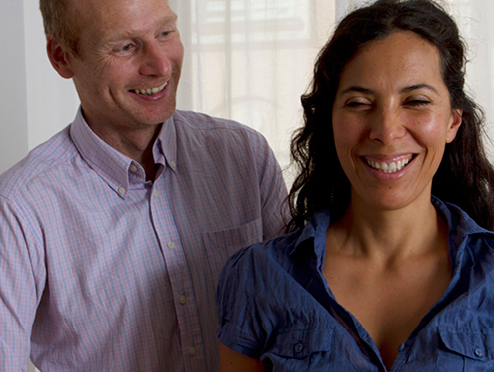
About Piers Parlett
I completed Don Weed's 2008 four-year training in the Interactive Teaching Method (ITM) of the Alexander Technique, and I'm a member of the ITM Teachers' Association. It's the most wonderful discipline or subject I've ever come across and I feel blessed to be able to share this work with others.
I teach at The Merchants House, 10 Town Quay, The Plains, Totnes, TQ9 5DW.
To find out more about the ITM: www.itmalexandertechnique.org
Book an Introductory Lesson
45–60 minutes — £50.
The Merchants House · 10 Town Quay, The Plains, Totnes, TQ9 5DW
Book directly hereNot sure whether a lesson is for you?
These are the questions people quietly ask themselves before booking — and the honest answers.
Do I need to be fit, flexible or have a particular problem?
No. Nothing here requires you to be able to do anything you can't already do.
We work with the activities you actually perform — sitting, standing, walking, playing, speaking. If you can do it now, we can work on it.
Do I need to have a problem?
No, and plenty of students don't.
Some come because something hurts, some because they want to play, speak or move better, and some are simply curious.
Curiosity is a perfectly good reason to come. In fact, it's often the one that gets the best results.
What actually happens in a lesson?
You stay fully clothed and upright for most of the lesson. Wear something comfortable that you can move in.
There's conversation, you're doing ordinary things, and there's some light hands-on work while you do them. Nobody manipulates your spine and nobody cracks anything.
The emphasis is on thinking and understanding what you're doing, rather than being physically put into a position.
Is this a massage or a treatment?
No — and this is an important difference.
I'm not doing something to you that you then need to come back for. I'm teaching you something you can take away and use for yourself.
If you're still dependent on me after a year, I've taught it badly.
How many lessons will I need?
Learning the Alexander Technique is a little like learning a language or a musical instrument. It takes time to develop, but you can make meaningful discoveries right from the beginning.
I suggest starting with an introductory taster lesson. If you find it interesting, I ask you to give it at least another three lessons so that you have a chance to explore the work properly and see what you can learn.
After that, there's no fixed course and no package to buy. You decide how far you want to take it.
Some people continue regularly for a while; others come back from time to time.
The aim is for you to become increasingly independent, not increasingly dependent on your teacher.
I tried the Alexander Technique before and didn't really get it. How is this different?
That's more common than you might think — and it may be worth another look.
I teach the Interactive Teaching Method (ITM), an approach to teaching the Alexander Technique that puts particular emphasis on thinking, reasoning and understanding what you're doing.
There is plenty of conversation and genuine interaction. Rather than simply being given an experience and being told what has changed, you're encouraged to investigate for yourself and understand the principles behind what you're doing.
If you've encountered the Alexander Technique before and found yourself thinking, “I'm not quite sure what I'm supposed to be getting from this,” you may find that this approach makes more sense.
And if it doesn't, that's useful information too.
Is the ITM a different technique?
No. It's a particular way of teaching the work of F. Matthias Alexander.
The principles and discoveries of Alexander are at the heart of what I teach. The distinctive thing about the ITM is the way those principles are explored — through thinking, reasoning, interaction and experience.
I'm quite sceptical about this sort of thing.
Good.
Scepticism can make for excellent students because the work is based on testing ideas rather than accepting them on faith.
You won't be asked to believe anything. You'll be asked to try things, pay attention and see what happens.
Is it religious or spiritual?
No. It's a practical discipline of reasoning about how you use yourself.
People come to it with all sorts of beliefs — or none at all. Your existing spiritual or religious practice, if you have one, can sit alongside it perfectly happily.
Will it help my back, neck, RSI or other condition?
I'm a teacher, not a clinician, so I don't diagnose or treat medical conditions.
What I teach is how you are using yourself in everyday activities, and how habitual patterns of tension and effort can affect the way you move, sit, stand, speak and breathe.
If you have a diagnosed condition, it's important to continue getting appropriate medical advice.
Am I too old for this?
No.
The capacity to learn and change doesn't disappear with age. People can become more skilful in how they use themselves throughout life.
Age isn't necessarily the obstacle. Sometimes our assumptions about what we can or can't change are.
Do I have to practise at home?
There's nothing to practise in the sense of exercises or routines.
What you learn gets applied to the things you're already doing all day. That's the whole point.
What if I can't afford lessons?
I'd rather money wasn't the reason that someone who is genuinely interested in the work couldn't explore it.
If the usual lesson fee would make it difficult for you, talk to me. I'm happy to discuss what's possible.
Can I learn in a group?
Yes. The ITM was developed with group teaching very much in mind, and the same principles can be explored whether you're working individually or as part of a group.
I'm currently planning a group with Adrian Bourner.
If you'd be interested in hearing more about this, send me a message or WhatsApp me and I'll let you know when the details are available.
How long is a lesson, and what does it cost?
Lessons are approximately 45–60 minutes and cost £50.
Your first lesson is an introductory taster, giving you a chance to experience the work and see whether it interests you.
If you want to explore it further, I suggest continuing for at least another three lessons so you have enough time to begin discovering what the work can do for you.
Where are you?
I'm at The Merchants House, 10 Town Quay, on The Plains in Totnes.
What if I come once and it's not for me?
Then it's not for you — and you'll have lost an hour and found something out.
I'd genuinely rather you tried it once and decided against it than spent another year wondering.
The Merchants House · 10 Town Quay, The Plains, Totnes, TQ9 5DW
Book an introductory lessonWhat Is the Alexander Technique?
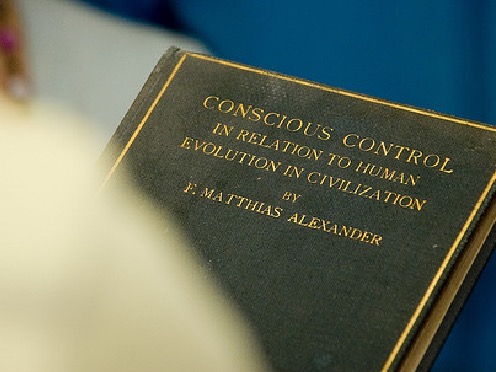
It began with an Australian actor, F.M. Alexander (1869–1955), who kept losing his voice on stage. No doctor or voice coach could fix it — so he set about working it out himself.
What he discovered was that the cause of his trouble wasn't his throat at all. It was him: something he was doing to himself in the way he used his voice. He learned to stop, to think about what he was doing, and to direct himself differently. His voice came back — and in the process he'd stumbled on a whole new field of study.
Alexander never called his work the Alexander Technique. “How can you name a thing that is so comprehensive?” he said. He just called it “the work.” For over a hundred years, people have been discovering this remarkable constellation of tools and principles — and applying them to everything from back pain to music to public speaking to simply feeling more at ease in their own skin.
It's the most wonderful discipline I've ever come across.
The Interactive Teaching Method (ITM)
The real difference between the ITM and more conventional ways of teaching the Alexander Technique isn't the number of students in the room. It's the manner in which the business of the class is transacted.
The emphasis is on thought and reasoning rather than on feeling or the giving of hands-on “experiences.” You're not lying there passively receiving a treatment — you're thinking, questioning, noticing the gap between what you think you're doing and what you're actually doing. That's where the real change happens.
The ITM was developed by my teacher, Don Weed, from the work of his own teacher, Marjorie Barstow — one of Alexander's first-generation students. Marjorie believed that because the Alexander Technique is primarily an educational process, it could be learned in a group just as well as any other subject. She was right.
I use the exact same procedures whether it's one person or a room of thirty.
What Happens in a Lesson
Your movement patterns come out of your thinking — change the manner of the thinking and the movement changes with it. So what we work on in a lesson is the thinking, and we use whatever you're doing as the place to look at it.
Gentle manipulation helps you get direct experience of Alexander's ideas while you're doing something familiar. Perhaps you'll marvel at how easy and beautiful movements become when they're consistent with our design. The principles you learn are yours to experiment with, at your own pace, in your own day-to-day activities.
Lessons are conversational. I'll ask you a lot of questions. Most students find they enjoy it more than they expected — which shouldn't be a surprise, since studying something you're genuinely curious about is one of the more enjoyable things a person can do.